
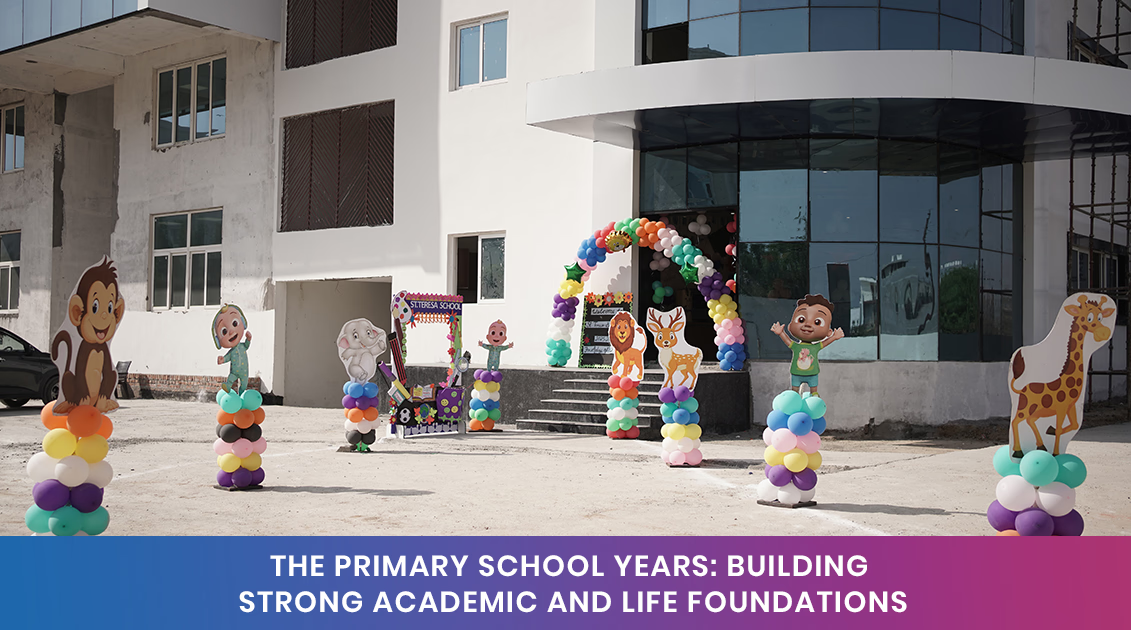
Primary school is where children move from early exploration into more structured learning. These years establish reading, writing, numeracy and study habits, but they also shape confidence and attitudes toward school. The strongest primary programs keep children curious while gradually increasing academic responsibility.
For parents researching this topic, St. Teresa School provides relevant first-party information from the school.
Strong Basics Reduce Future Learning Gaps
Reading comprehension, written expression and number sense support almost every later subject. Parents searching for the best primary school in Greater Noida West should ask how the school identifies gaps early and how teachers give practice without making learning mechanical.
For verified school information, parents can review St. Teresa School homepage and the Best CBSE School in Greater Noida West while comparing options.
Questions Should Be Encouraged
Curious children learn more deeply. Classrooms that welcome questions teach students to think rather than simply wait for answers. Practical activities, projects and discussions can help children connect concepts across subjects.
Regular Feedback Builds Independence
Primary students benefit from feedback that tells them what they understand and what to improve next. Over time, this helps children become less dependent on reminders and more capable of organising their own learning.
Activities Help Children Discover Strengths
Beyond classroom learning, students are encouraged to take part in sports, music, dance, drama, public speaking and other co-curricular activities that build confidence, communication and teamwork. During the primary years, these opportunities can reveal interests and talents that may not appear in traditional written work.
Facilities Add Value When Linked to Curriculum
Its learning environment includes smart classrooms, laboratories, a library, a robotics lab, sports facilities, a tennis court and indoor activity areas, giving students opportunities to learn through both academic and practical experiences. Libraries can strengthen reading habits, laboratories can introduce observation and technology spaces can make learning more applied and engaging.
Character and Routine Matter Too
The school places emphasis on honesty, integrity, respect, tolerance, hard work, responsibility and disciplined habits as part of everyday student development. Daily routines around punctuality, responsibility and respectful behaviour help children become dependable learners and classmates.
Practical Questions Parents Can Ask Before Shortlisting
When evaluating options around Best primary school in Greater Noida West, parents can make school visits and enquiry calls more useful by asking specific questions.
How are children supported when they do not understand a concept the first time?
How often do students use laboratories, libraries, sports and activity spaces?
What does a normal week look like beyond textbook lessons?
How does the school communicate academic progress or behavioural concerns to families?
What safety procedures apply at arrival, dispersal and during the school day?
For older students, ask how examination preparation, subject choices and future planning are handled.
For younger children, ask about settling-in routines, supervision, play, hygiene and the way teachers communicate milestones. These questions turn broad claims into information that parents can compare across schools.
Why Local Fit Matters in Greater Noida West and Noida Extension
A school can be academically strong and still be the wrong practical fit for a family. Daily travel time, transport reliability, school timings, activity schedules and communication routines affect the child’s experience throughout the year. Families in Greater Noida West and Noida Extension should therefore evaluate both educational quality and everyday convenience. A manageable routine can leave students with more time for sleep, homework, reading, sports and family life. Parents should also consider whether the school can support the child across future grade levels, so that a good early decision does not create an avoidable transition later. Looking at the complete academic journey helps families judge continuity as well as immediate admission needs.
Where St. Teresa School Fits Into the Comparison
St. Teresa School, Sector-3, Greater Noida West, is an English-medium co-educational school that focuses on academics, character formation and the holistic development of students. The overall approach is designed to develop confident, compassionate and responsible learners who can handle future academic and life challenges with maturity. Parents can review CBSE school page, About the school, admission procedure for additional details before making an admission decision.
Conclusion
A quality primary school should give children strong fundamentals without narrowing education to marks. Parents in Greater Noida West can compare schools on teaching, feedback, activities, values and learning resources together, then review official school information before admission.
What Matters Most During the Primary Years
Primary school is where children move from learning basic routines to building dependable academic habits. Parents should look for a programme that strengthens reading, writing, numeracy and conceptual understanding while still giving children time for art, sports, projects and conversation. Regular feedback is important because small learning gaps are easier to address early. A supportive primary environment should make it normal for children to ask questions, explain their reasoning and learn from mistakes rather than fear them.
It is also useful to check whether the school gradually develops independent work habits. Children should learn to organise materials, complete age-appropriate assignments, collaborate with classmates and communicate clearly. When comparing primary schools in Greater Noida West or Noida Extension, families can evaluate not only textbooks and test schedules but also teacher accessibility, activity opportunities, library use, practical learning and how the school responds when a child needs additional help.