
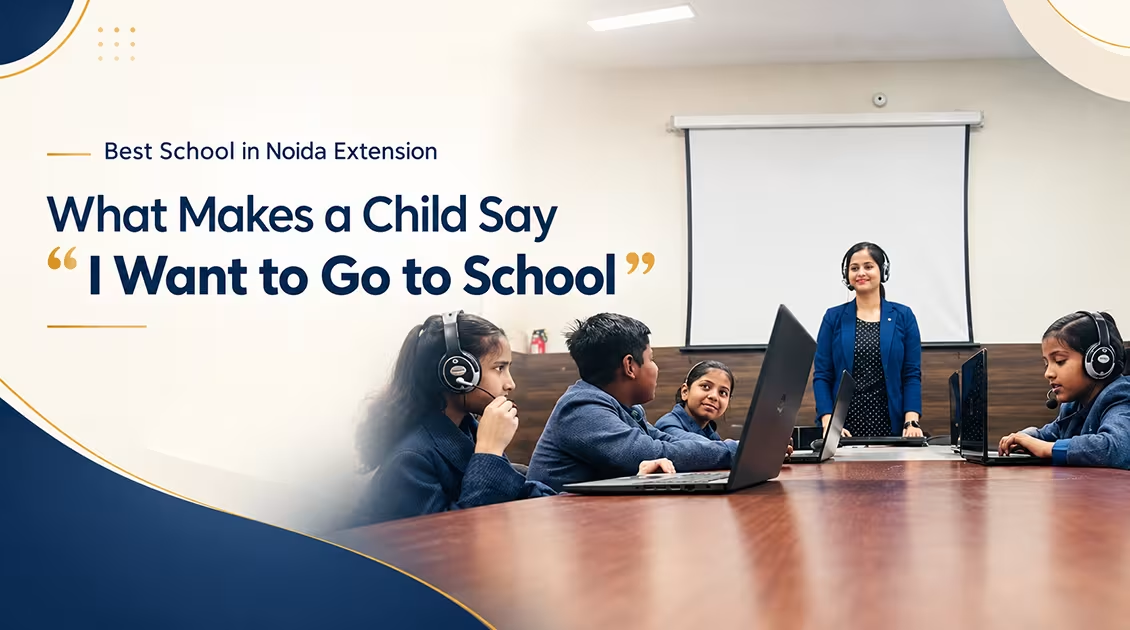
Imagine your child returning home eager to explain something they discovered in class. Perhaps they solved a problem differently, spoke confidently during an activity, or made a new friend. These moments rarely appear in a school brochure, yet they matter deeply to families.
When parents search for the best school in Noida Extension, they are often looking for more than academic results. They want a place where their child can learn, feel supported, develop interests, and gradually become more independent.
This guide explores what makes a school experience meaningful and how to assess those qualities. It also introduces St. Teresa School, Sector-3, Greater Noida West, through its published information and questions parents can explore during a visit.
What Makes a School the Best Fit for Your Child?
The best school for your child combines suitable teaching, reliable support, clear safety procedures, meaningful activities, and a manageable daily routine. Compare these qualities through verified information and campus visits rather than relying only on rankings or advertising. Every child brings different strengths, interests, and needs. A confident learner may enjoy frequent opportunities to present ideas. Another child may need more encouragement before participating. Begin by understanding your child’s current experience. What do they enjoy? Where do they struggle? What helps them feel comfortable? Those answers provide a useful foundation for choosing a school.
A Positive School Experience Begins with Belonging
Children need time to understand a new environment and build relationships. Feeling included can make it easier to ask questions, try unfamiliar activities, and seek help.
During a school visit, observe how adults interact with students. Are instructions clear? Are questions welcomed? How do staff respond when a child makes a mistake?
Ask how new students are introduced to classmates and routines. Find out who notices if a child becomes withdrawn or has difficulty joining activities.
Belonging does not mean every day will be easy. It means children know where to turn when they need support and feel that their concerns will be heard.
Learning Should Encourage Understanding
Academic progress involves more than completing assignments and remembering answers.
Ask how teachers help students understand concepts, explain their reasoning, and apply ideas. A useful lesson might connect a mathematical concept to a practical problem or encourage children to compare different interpretations of a story.
Request examples appropriate to your child’s class. Find out how teachers identify misunderstandings and what happens next.
Assessment should provide useful information about learning. Ask whether parents receive feedback explaining strengths, areas requiring attention, and practical ways to support progress.
These details reveal more about teaching than broad descriptions such as “excellent academics.”
Confidence Grows Through Everyday Opportunities
Confidence is often built through small experiences: asking for clarification, answering a question, joining a group, or completing a task that initially seemed difficult.
Ask how teachers encourage participation without making hesitant children feel exposed. Some students may prefer preparing an answer before speaking. Others may feel more comfortable beginning in a small group.
Opportunities should allow different personalities to develop at an appropriate pace.
Also ask how effort and improvement are recognised. When children understand that progress matters, they may become more willing to attempt unfamiliar work rather than avoid possible mistakes.
Why Individual Learning Support Matters
Children do not develop every skill at the same speed. A student who reads confidently may need help with mathematics. Another may understand ideas well but struggle to express them in writing.
Ask how the school identifies these differences and responds.
Useful questions include:
- 1. What happens when a student repeatedly struggles?
- 2. How are parents informed?
- 3. What additional support is available?
- 4. Are there separate charges for any services?
- 5. How are students challenged when they need more advanced work?
Discuss known learning or accessibility needs before admission. Clear information helps families and schools assess whether suitable support can be provided.
Looking Beyond the Classroom at St. Teresa School
Activities give children opportunities to explore interests and practise skills in different settings.
St. Teresa School’s official About page mentions music, dance, sports, drama, and public speaking. Parents can ask which activities are currently available to their child’s age group and how participation is organised.
Find out whether activities are regularly scheduled or mainly offered around events. Ask whether all students can participate and whether additional fees apply.
For a child discovering a new interest, consistent access and encouragement may be more important than competitions. Look for opportunities to explore before expecting achievement.
Facilities Matter When Children Actually Use Them
A school tour may include impressive learning spaces. Their value depends on what students do there.
St. Teresa School’s website lists a computer lab, robotics lab, playground, tennis court, and indoor sports area. Confirm current availability, supervision, and access for your child’s class during your visit.
Ask for a recent example of an activity completed in each relevant space. How did it connect to learning? What skills did students practise?
These questions help you move beyond the presence of equipment to understand its role in the school day.
Safety Should Be Explained Through Procedures
Parents need clear answers about how safety is managed.
Ask about visitor entry, authorised collection, and changes to pickup arrangements. Understand what happens when a child becomes unwell or requires urgent assistance.
If transport is available, discuss supervision, emergency communication, and coverage for your address. Confirm the expected route and journey time.
Also ask how the school responds to bullying and peer conflict. Parents should know whom to contact, how concerns are documented, and how follow-up happens.
Specific procedures provide a stronger basis for confidence than a general statement that children are safe.
Parent–School Communication Should Be Clear
Parents and teachers see different parts of a child’s life. Regular communication helps connect those perspectives.
Ask how progress updates are shared, how meetings are arranged, and which channel to use for concerns. Clarify response expectations and escalation procedures.
Useful feedback explains what your child understands and where they need support. It should also help you know what assistance at home would be appropriate.
During admission enquiries, notice whether important information is provided clearly and in writing. Unanswered questions about policies, fees, or support should be clarified before enrolment.
Understanding St. Teresa School’s Published Approach
St. Teresa School, Sector-3, Greater Noida West, describes itself as an English-medium, co-educational institution managed by the Kshitij Shiksha Samiti Trust. Its published approach emphasises academic learning alongside social, emotional, and personal development.
These stated priorities offer useful topics for a campus discussion.
Ask how personal development appears in lessons, activities, and daily interactions. Request examples of how teachers encourage cooperation, responsibility, and independent thinking.
This article does not establish an independent “best school” ranking. Families should assess the school’s suitability through current information and their own enquiry.
The Daily Routine Is Part of the Decision
When choosing the best school in Noida Extension for your family, consider the whole day.
Test the journey around the expected travel time. Think about when your child would wake up, leave home, return, and complete homework.
Ask about the timetable and homework expectations for the intended class. A manageable routine leaves room for rest, play, meals, and family interaction.
If using school transport, confirm the stop and likely travel duration before relying on it. Practical details can influence how comfortably your child participates in school life.
Compare the Complete Cost Before Admission
Request a written fee breakdown rather than comparing tuition alone.
Include admission charges, recurring fees, transport, books, uniforms, and applicable extras. Ask which expenses are compulsory and which are optional.
Clarify payment schedules, withdrawal terms, refund policies, and how changes are communicated.
A financially sustainable choice supports continuity. Clear costs also help you compare shortlisted schools fairly and avoid unexpected commitments.
Keep the same categories for each school so that your comparison reflects the total expense.
Make Your Campus Visit More Useful
Prepare a short checklist and record answers while they are fresh.
| Area | Question to explore |
|---|---|
| Teaching | How do teachers check understanding? |
| Support | What happens when a child needs help? |
| Wellbeing | How are adjustment concerns handled? |
| Activities | What can students access regularly? |
| Safety | How are collections and emergencies managed? |
| Costs | What is the complete expected expense? |
Where permitted, include your child in the visit. Consider their response alongside practical information rather than expecting them to make the decision alone.
Take the Next Step Towards an Informed Choice
Finding the best school in Noida Extension begins with understanding what your child needs from school life.
To explore St. Teresa School, Sector-3, Greater Noida West, arrange an enquiry or campus visit. Discuss learning, support, activities, safety, fees, and the daily routine.
Choose with clear information and realistic expectations. The aim is a school experience where your child can participate, seek help, discover interests, and steadily develop confidence.